
Description
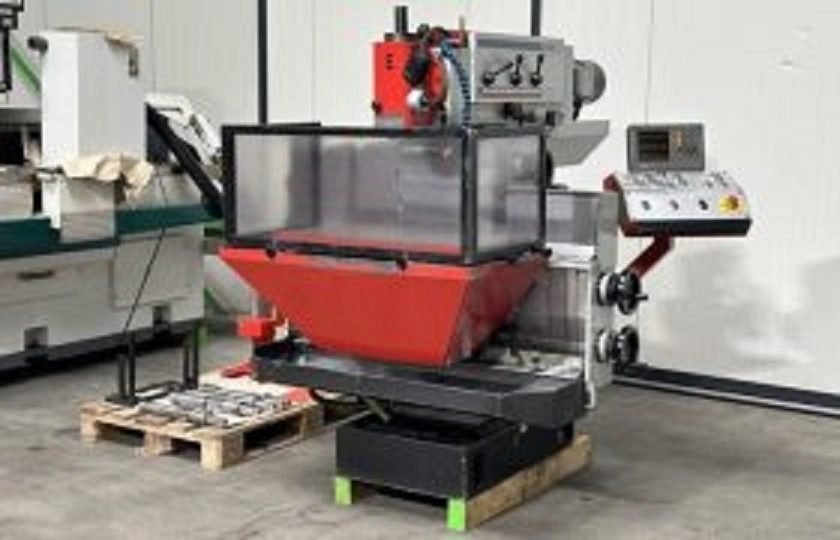
EMCOFB4 Milling machine
EMCOFB4 Milling machine for sale
Looking for a reliable and easy-to-use milling machine? This EMCO FB-4 Milling Machine is a great choice for workshops and light industrial work. It is built for accuracy, flexibility, and consistent performance.
Compact and Practical Design
This milling machine offers a compact design that fits well in most workshops. Despite its size, it provides a strong and stable working platform.
With a weight of around 1500 kg, it delivers good stability and reduces vibration during operation.
Good Working Range
The machine provides a useful travel range for different jobs:
- X-axis (longitudinal): 450 mm
- Y-axis (transverse): 300 mm
- Z-axis (vertical): 350 mm
This makes it suitable for small to medium-sized machining tasks.
Large and Stable Table
The clamping surface of 800 x 400 mm gives you enough space to work comfortably. It allows you to secure different types of workpieces with ease.
EMCOFB4 Milling machine Flexible Milling Head
The machine features a swiveling vertical milling head (±90°). This allows you to work at different angles and handle more complex machining tasks.
The quill stroke of 100 mm adds extra flexibility during operation.
EMCOFB4 Milling machine Reliable Spindle Performance
This milling machine uses an SK 40 tool holder, which is common and easy to source.
The spindle speed ranges from 50 to 2500 RPM, giving you control for both slow and high-speed work.
Easy to Use
This machine is simple to operate and suitable for both experienced users and general workshop use. The controls are straightforward, helping you work efficiently.
Strong and Durable Build
The solid construction ensures long-lasting performance. It is designed to handle regular use while maintaining accuracy.
Machine dimensions:
- Length: 1485 mm
- Width: 1475 mm
- Height: 1475 mm
A Great Workshop Machine
This EMCO FB-4 milling machine for sale is a dependable option for workshops that need a compact, reliable, and versatile machine.
Contact Us Today
Interested in this EMCO milling machine? Contact us today for more details or a free quote.


Reviews
There are no reviews yet.